In this story
No rooms to book here
The misunderstanding is understandable, particularly outside France. A French hôtel particulier is not a boutique hotel. There is no reception desk or room service. Historically, hôtel could describe an important urban residence; particulier made clear that it belonged to the private realm. It was, in essence, a distinguished town house, built for a family or someone of standing.
That definition tells us something about the society that produced it. Wealthy families wanted to be close to business, institutions, acquaintances and the pleasures of the city. They also wanted the luxury of shutting the gate. To be near everything, without necessarily admitting everyone.
Size alone is no test. There is no prescribed number of windows, storeys or carved fireplaces. A maison de maître may share some of the same grandeur; a château may have been conceived for pleasure rather than defence. The most useful clues are the building’s history, its urban setting and the way rooms are arranged for both private life and entertaining.
Inside the city, away from the street
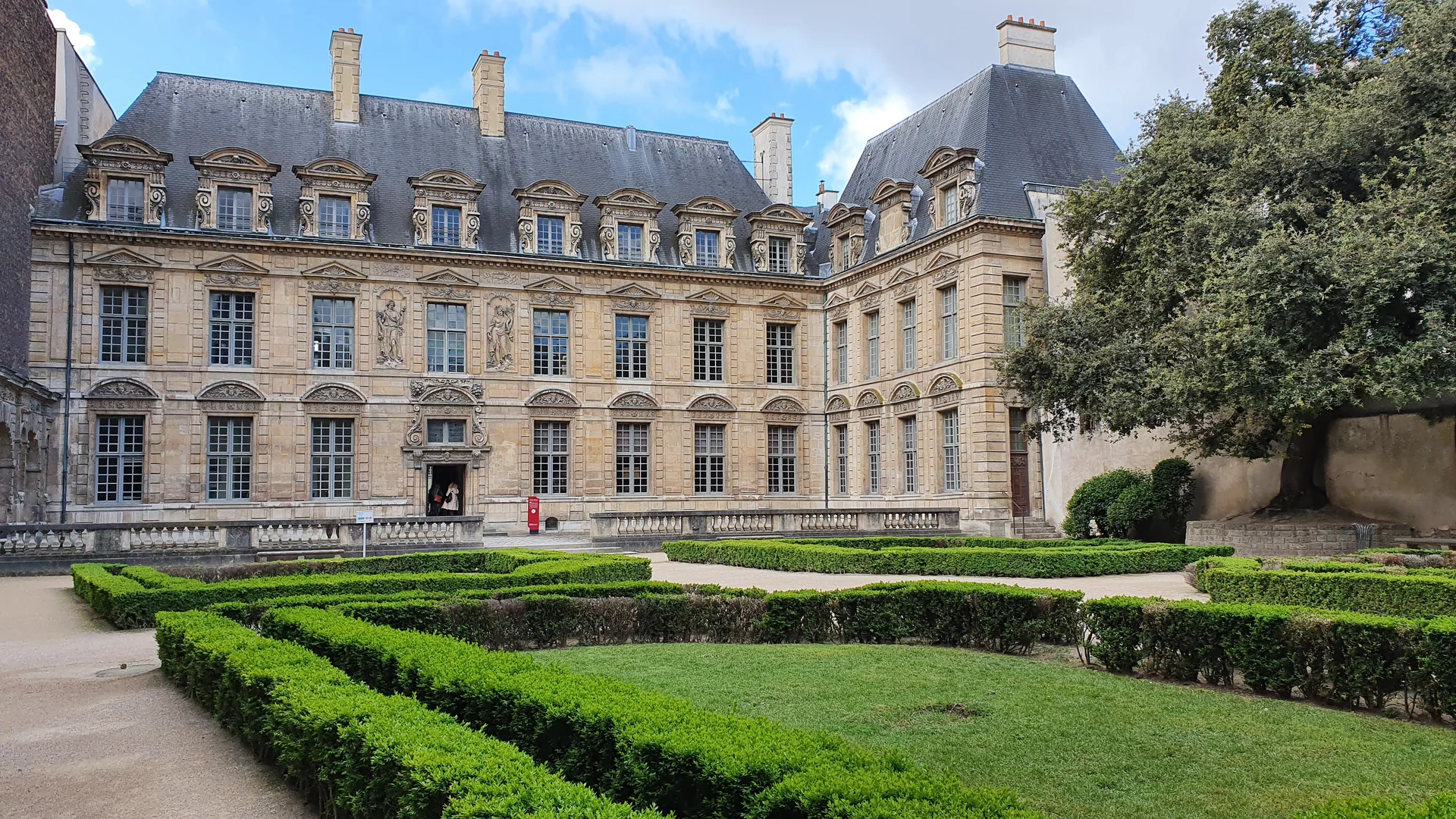
The most celebrated plan is the house entre cour et jardin — between courtyard and garden. You leave the street through a gateway, cross a courtyard and reach the principal building. Beyond it, the main rooms often face a garden shielded from public view. Arrival is part of the experience.
This arrangement flourished in the great Parisian houses of the seventeenth and eighteenth centuries. Reception rooms had their ceremony; family quarters their privacy; service wings took care of the less theatrical necessities of everyday life.
Yet not every hôtel particulier follows this model. An old town centre offers little respect for architectural theory: narrow plots, irregular streets and neighbouring buildings demand compromises. Some residences front directly onto the street. Others conceal a modest courtyard, an elegant staircase or an unexpected walled garden.
The street façade, in other words, rarely tells the whole story. That is part of their appeal.

A French tradition far beyond Paris
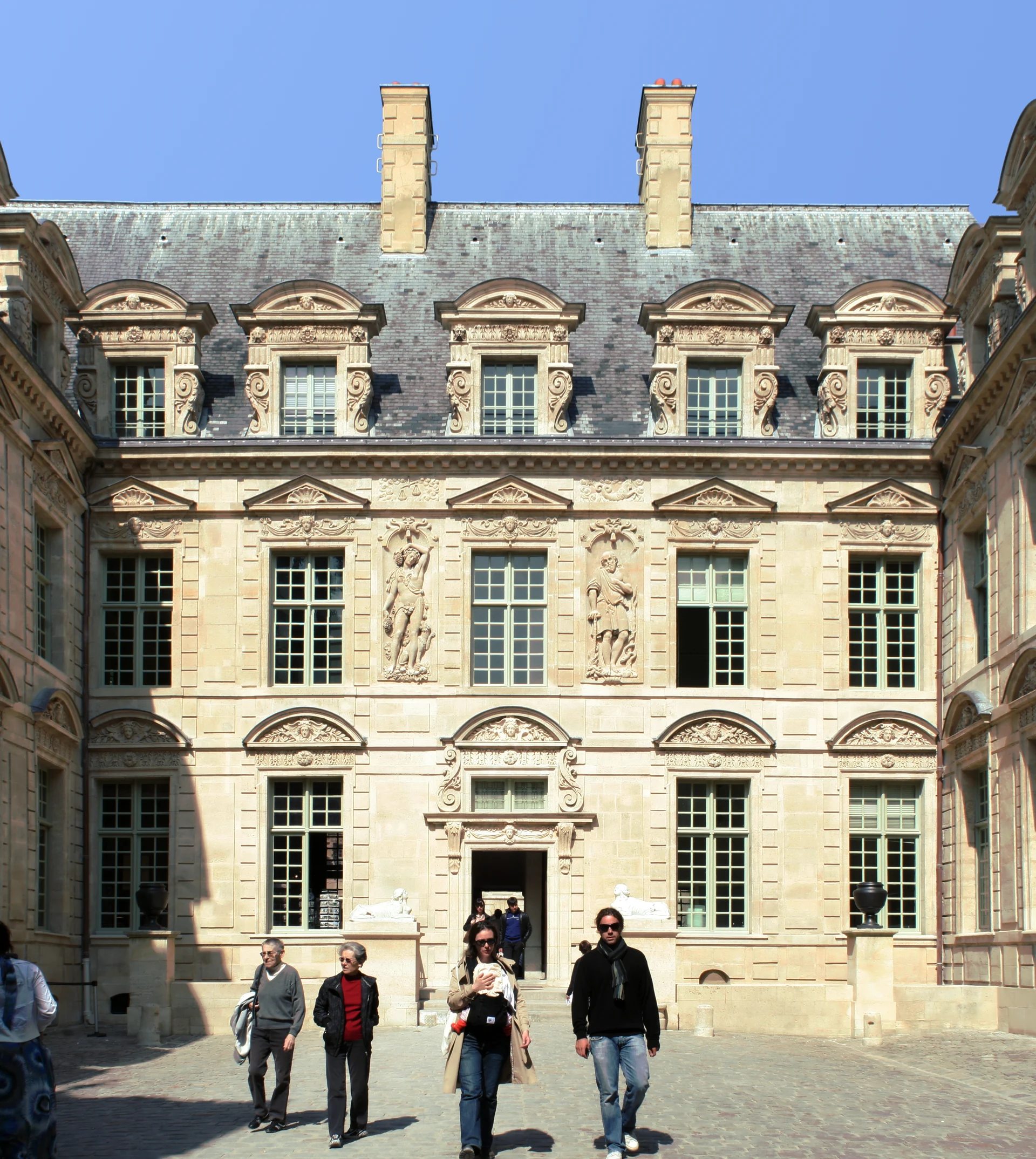
Paris gave the hôtel particulier some of its best-known addresses, particularly in the Marais. But the history of private urban architecture does not end at the capital’s ring road. Bordeaux, Dijon, Toulouse, Poitiers and Niort also retain homes built for merchants, magistrates, manufacturers and physicians.
The buildings reflect different centuries and different ambitions. In the late nineteenth century, architects were particularly happy to borrow from the past. Renaissance references, sculpted stone, elaborate ironwork and the occasional flourish of historical fantasy were not considered mutually exclusive.
Inside, decorative arts could become the real protagonists. Stained glass transformed staircases; carved woodwork gave reception rooms depth; mosaics spread patterns under visitors’ feet; painted ceilings drew the eye upwards. Such houses were collaborative works. The architect designed the setting, while artists and craftspeople gave it its particular character.
Houses were meant to be lived in
There is a temptation to imagine fine old buildings preserved forever at the moment they were completed. That would make for rather dreary homes. Their owners changed, furniture came and went, heating and electricity arrived, and everyday life repeatedly found new ways to occupy old rooms.
Sensitive conservation matters. So does knowing which details are historic and which were added later. But a contemporary sofa does not offend a nineteenth-century ceiling simply by existing beneath it.
An hôtel particulier is not one architectural style, nor a Paris-only curiosity, nor a museum waiting for a curator. It is a particularly French solution to an enduring problem: how to enjoy the city and still have somewhere to close the door. There are worse ambitions.
Frequently asked questions
Why does it use the word ‘hôtel’?
The word ‘hôtel’ comes from the Old French ‘hostel’, one of whose meanings was a place to live. In ‘hôtel particulier’, it refers to a private urban residence, rather than a place where travellers stay.
How does it differ from a maison de maître?
An hôtel particulier was historically a grand urban residence, sometimes laid out between a courtyard and a garden. A maison de maître generally means an owner’s principal residence, often in the countryside or a small town. The terms can overlap depending on the period and region.
Are there hôtels particuliers outside Paris?
Yes. Examples can be found in Bordeaux, Lyon, Toulouse, Dijon, Poitiers and Aix-en-Provence, as well as in towns such as Niort. Georges Lasseron designed a neo-Renaissance hôtel particulier there, built in 1894.
Can you buy an apartment in an hôtel particulier?
Yes. Some hôtels particuliers have been divided into apartments under the French co-ownership system. This is the case for the 1894 property in Niort, where a residence with a private garden and orangery is currently for sale.
An architectural example in Niort
Within an 1894 hôtel particulier designed by Georges Lasseron in central Niort, a 236.5 m² residence with a private garden and orangery is currently offered for sale.
Explore the residence