In this story
The city that resists the postcard
“Why Niort?” is a perfectly sensible question if you are considering a move to western France. Nantes, Bordeaux and La Rochelle arrive in the conversation with ready-made images. Niort takes a little explaining. That is not necessarily a weakness, although tourist brochures may disagree.
The capital of the Deux-Sèvres department, in Nouvelle-Aquitaine, has a population of around 60,000. It has the services, shops and economic activity of a proper town without the scale — or the pretensions — of a major metropolis. Whether that is a virtue depends on what you want from your days.
The best way to judge it is on an ordinary weekday. Visit the centre, watch people doing their shopping, follow the streets beyond the obvious landmarks. The version of a place that remains after the weekend visitors have gone is usually the one worth knowing.
The market makes the introduction
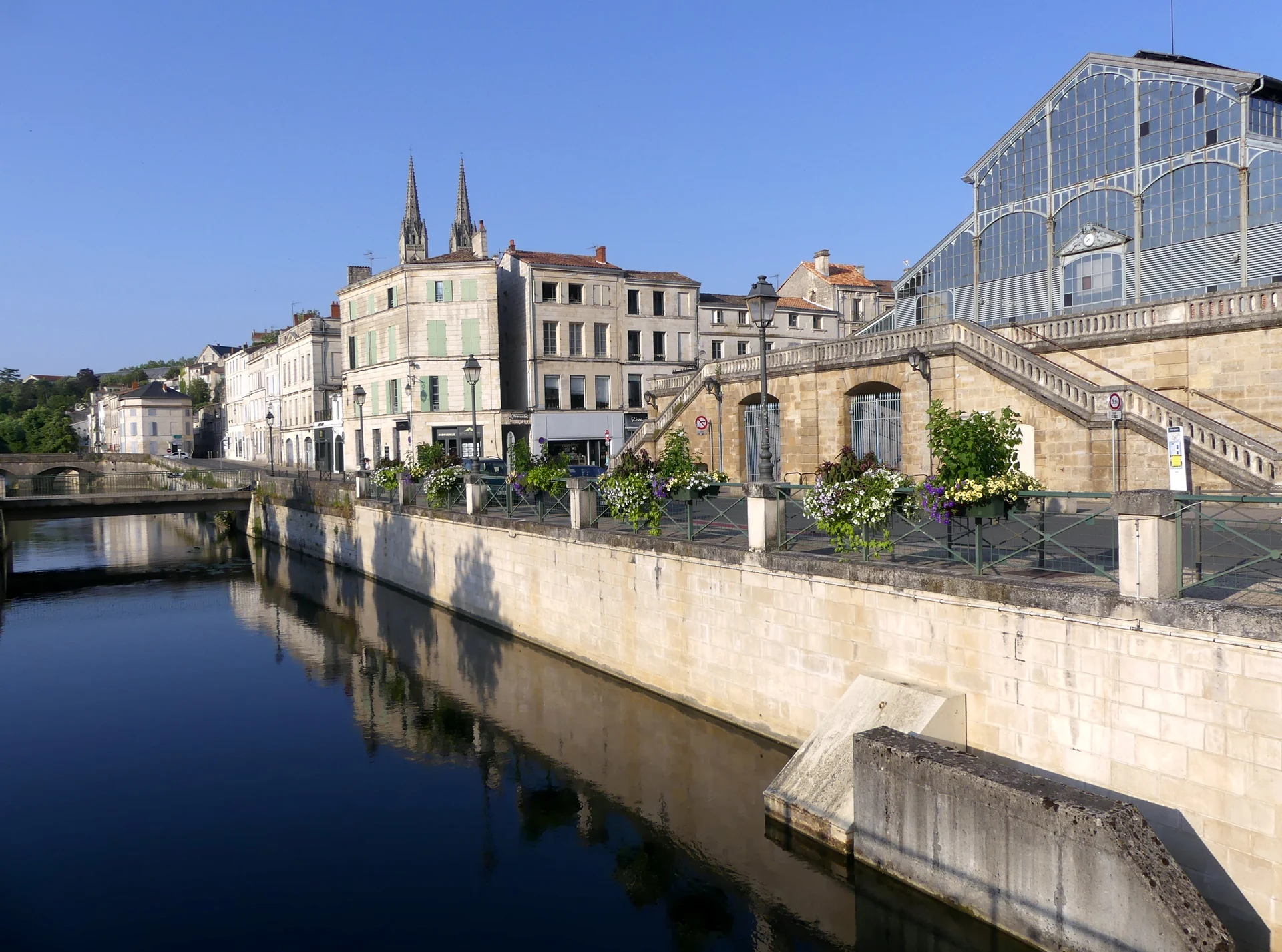
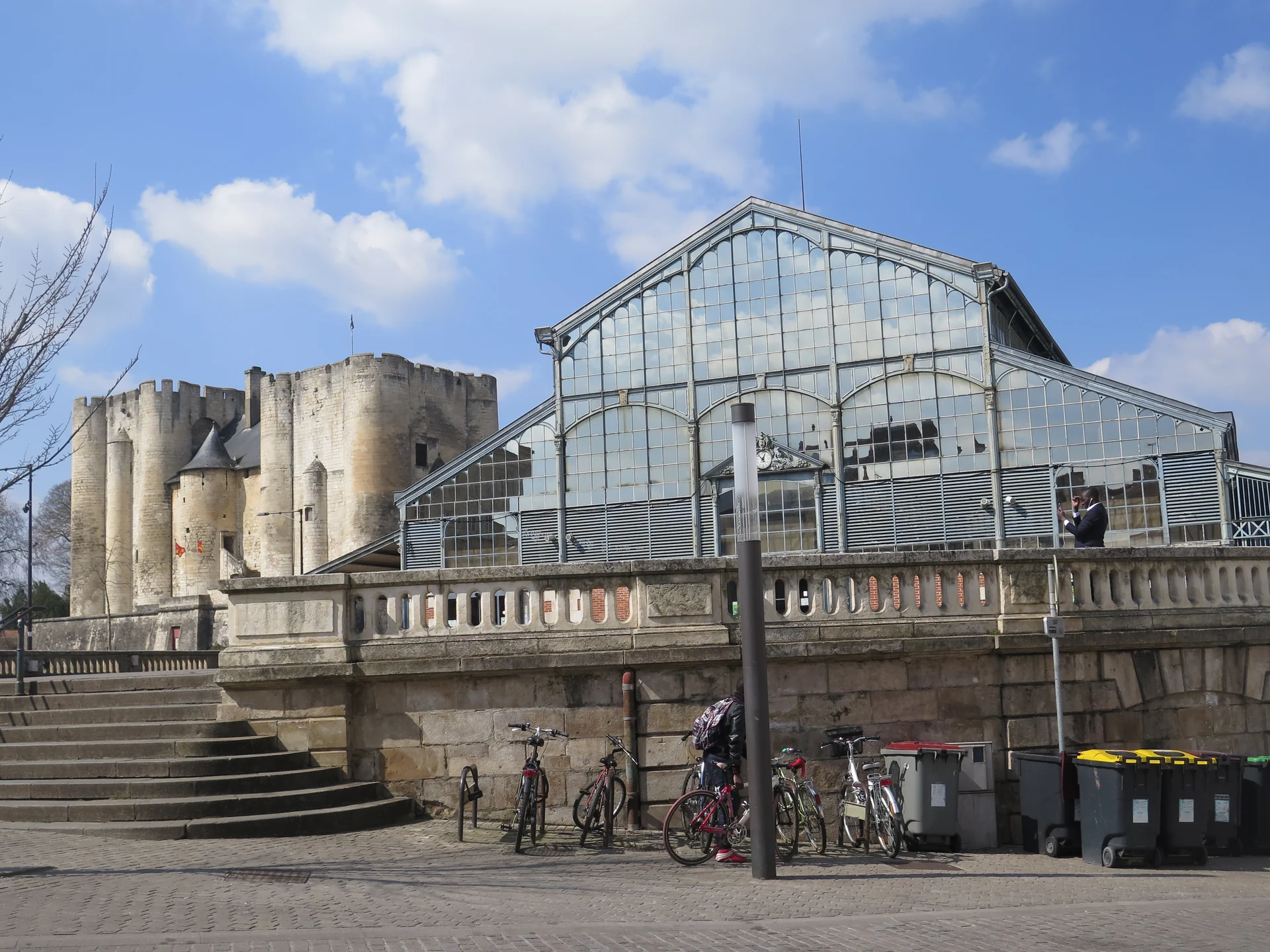
Start at Les Halles. Completed in 1871, the iron-and-glass market building belongs to the age when engineering could still be splendidly decorative. Under its roof, shopping remains an everyday business rather than a heritage demonstration staged for tourists.
In 2024, Niort's market won the title of France's Most Beautiful Market. A pleasant accolade, although its regular customers did not require a national competition to work out where to buy lunch.
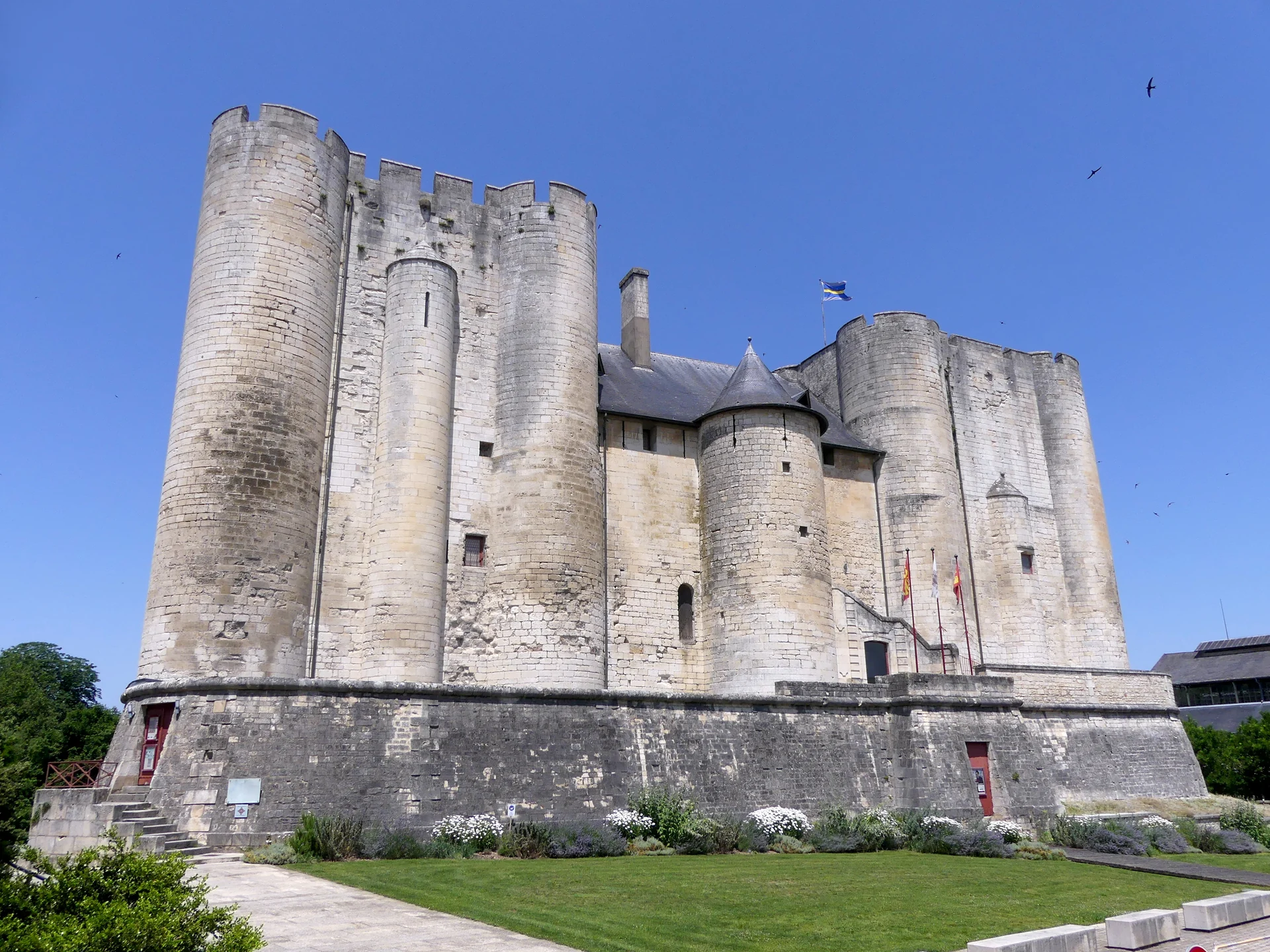
A few steps away, the twin-towered Donjon takes the story back to the late twelfth century and the age of the Plantagenets. Medieval fortifications beside a nineteenth-century market: this is a city that lets its centuries rub shoulders.
Walk a little further and you find shops, old doorways, churches and façades that reward looking up. The landscaped Place de la Brèche belongs to a more recent chapter. Cities are often more interesting for having lived through several periods than for looking uniformly picturesque.

An industrial past that still has a place
At Port Boinot, beside the Sèvre Niortaise, a former chamois-leather and glove-making complex has been given a new life as gardens, walking routes and public spaces. Happily, the redevelopment did not require every trace of manufacturing to disappear.
Chamois leather and glove production shaped local employment long before modern finance arrived. The surviving industrial buildings are reminders that Niort's history was made by work as well as by monuments.
Today the town is also associated with mutual insurance. Major names such as MAIF, MACIF, MAAF and SMACL have longstanding connections with the wider Niort area. Their presence has supported jobs in assistance, technology, finance and risk management.
There is not much romance in an insurance headquarters. There is, however, something attractive about a town whose economy exists all year, whether or not anyone has booked a summer holiday there.
The river leads into another landscape
Then there is the Sèvre. It passes through Niort and carries the eye west towards the Marais poitevin. The Coulée Verte offers riverside walks and cycle routes as the surroundings gradually become greener.
Further on, around Coulon, the canals and shaded waterways of the so-called Green Venice reveal another side of the region. It is not the Atlantic coast, although water is everywhere. It simply behaves differently here.
La Rochelle is within reach, and Niort also has direct high-speed rail connections to Paris. But the town deserves better than being sold merely as a convenient substitute for somewhere else. One can enjoy the ocean without choosing to live beside it, just as one can keep connections to Paris and prefer a smaller city at home.

Looking beyond the monuments
Niort's architectural history is richer than its modest reputation suggests. Alongside the Donjon are substantial nineteenth-century civic buildings, older town houses, ironwork and private façades. Architect Georges Lasseron contributed to the changing cityscape through public and private commissions; the Musée Bernard-d'Agesci occupies a former girls' school of his design.
Much of this architecture does not come with a ticket office. Some buildings remain private houses, others have changed use. That is precisely what makes them part of a living city rather than an open-air collection.
For people exploring period apartments, town houses or historic homes in Deux-Sèvres, such surroundings are part of the equation. They do not make every property a good purchase; they do make the neighbourhood worth understanding.
Not for everyone. Fortunately.
Those who want the perpetual buzz of a capital, beaches at the end of the street or entertainment at all hours may find Niort too restrained. Transport, cultural life and daily services also vary by neighbourhood and personal routine.
Yet dismissing it without a visit would be a mistake. Niort combines real urban life, an identifiable local economy, historical depth and nearby landscapes that reward exploration.
The cities we choose to live in rarely resemble the places we visit for a weekend. Niort has one particularly useful quality: it stands up rather well to a second visit.