01
The entrance hall
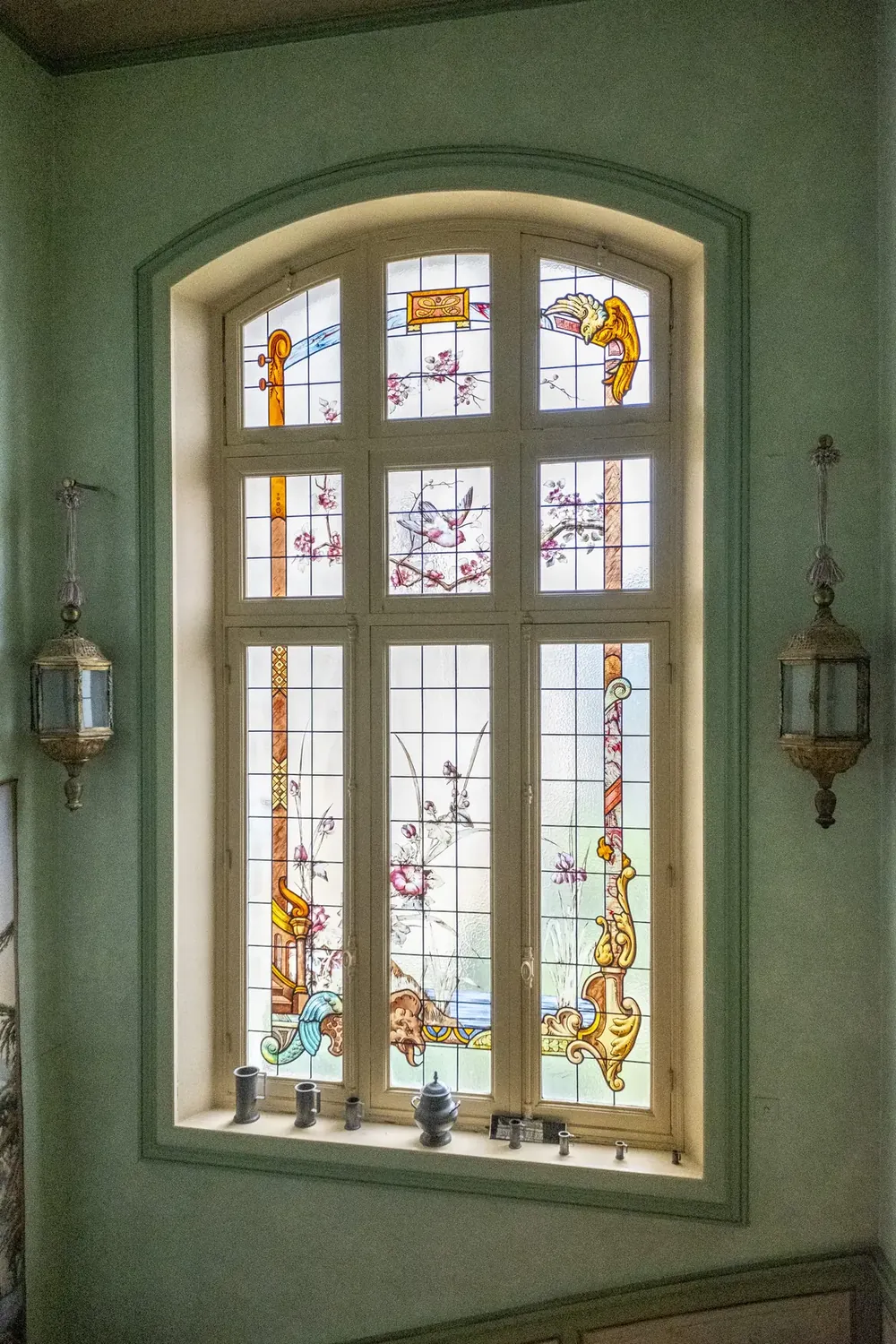
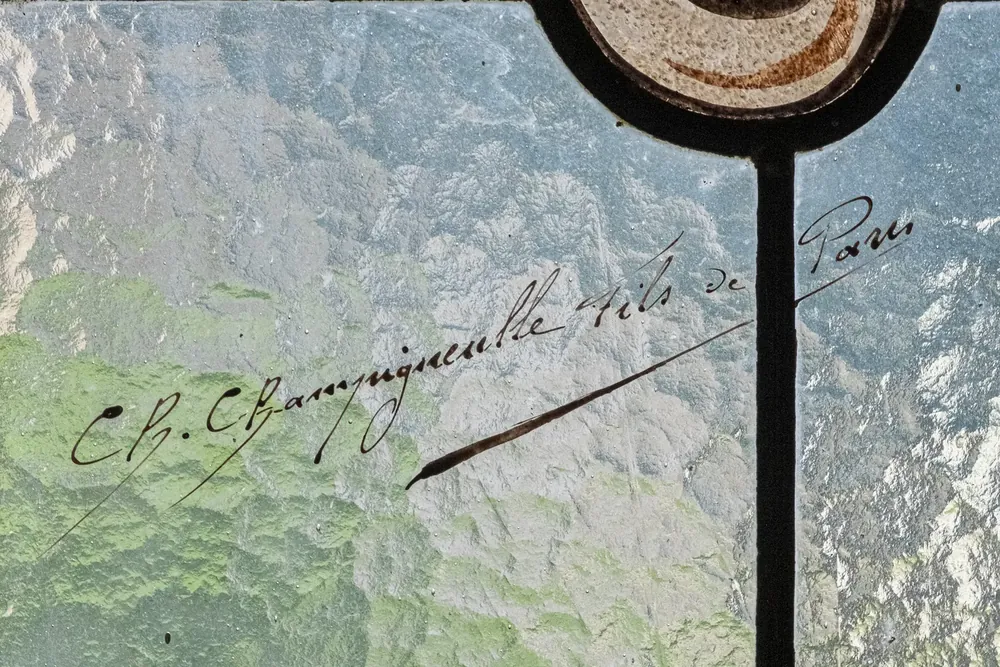
Marble, restored mosaic and wrought iron set the tone. The stone staircase rises beneath a window signed Ch. Champigneulle fils de Paris.
Niort · Nouvelle-Aquitaine · France
For sale in central Niort: a 236.5 m² residence within an 1894 hôtel particulier, with three bedrooms, a private walled garden and an orangery.
The residence
Behind the stone façade, a succession of reception rooms opens onto a more private world: painted ceilings, decorative wood panelling, stained glass and a garden sheltered by its walls. This is the principal residence within a historic building, with the scale and atmosphere of a house.
The two-level layout brings together generous living rooms, three bedrooms, four bathrooms and a contemporary kitchen. Outside, the formal garden leads to a separate orangery. A double garage makes everyday arrivals straightforward.
With two independent entrances and direct access from the kitchen to the private garden, the residence offers qualities buyers look for in a home with character. It forms part of a property held in co-ownership.
Practical detailsA closer look at the house
Explore the reception rooms and garden, then look closer at the stained glass, mosaic and decorative craftsmanship.
Photographs supplied for this property.
Room by room
Grand rooms for gathering, quieter corners for reading, and a garden adjoining the house.
01
Marble, restored mosaic and wrought iron set the tone. The stone staircase rises beneath a window signed Ch. Champigneulle fils de Paris.
02
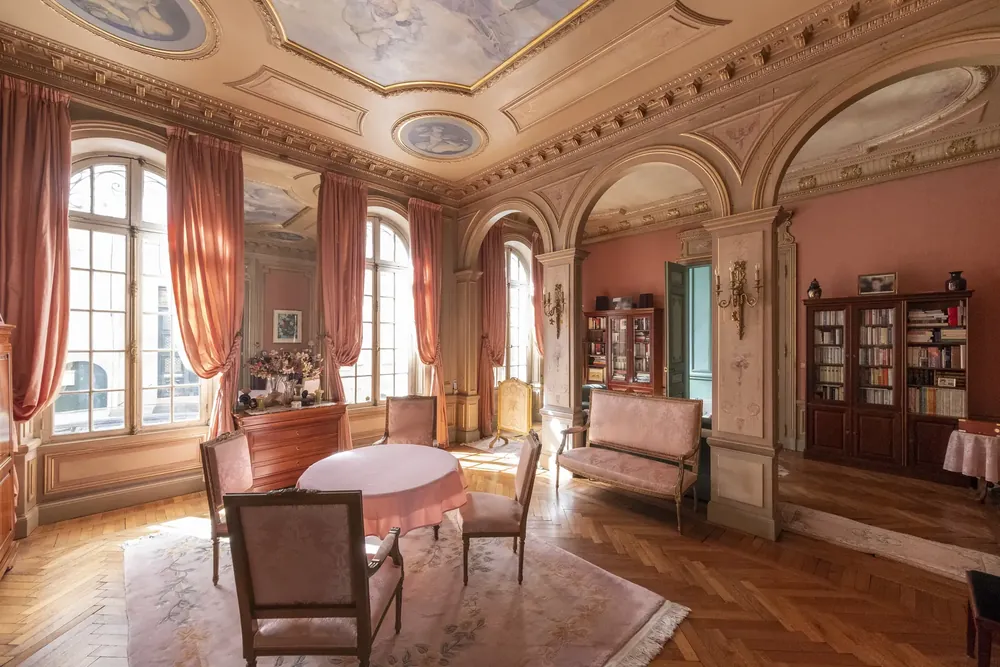
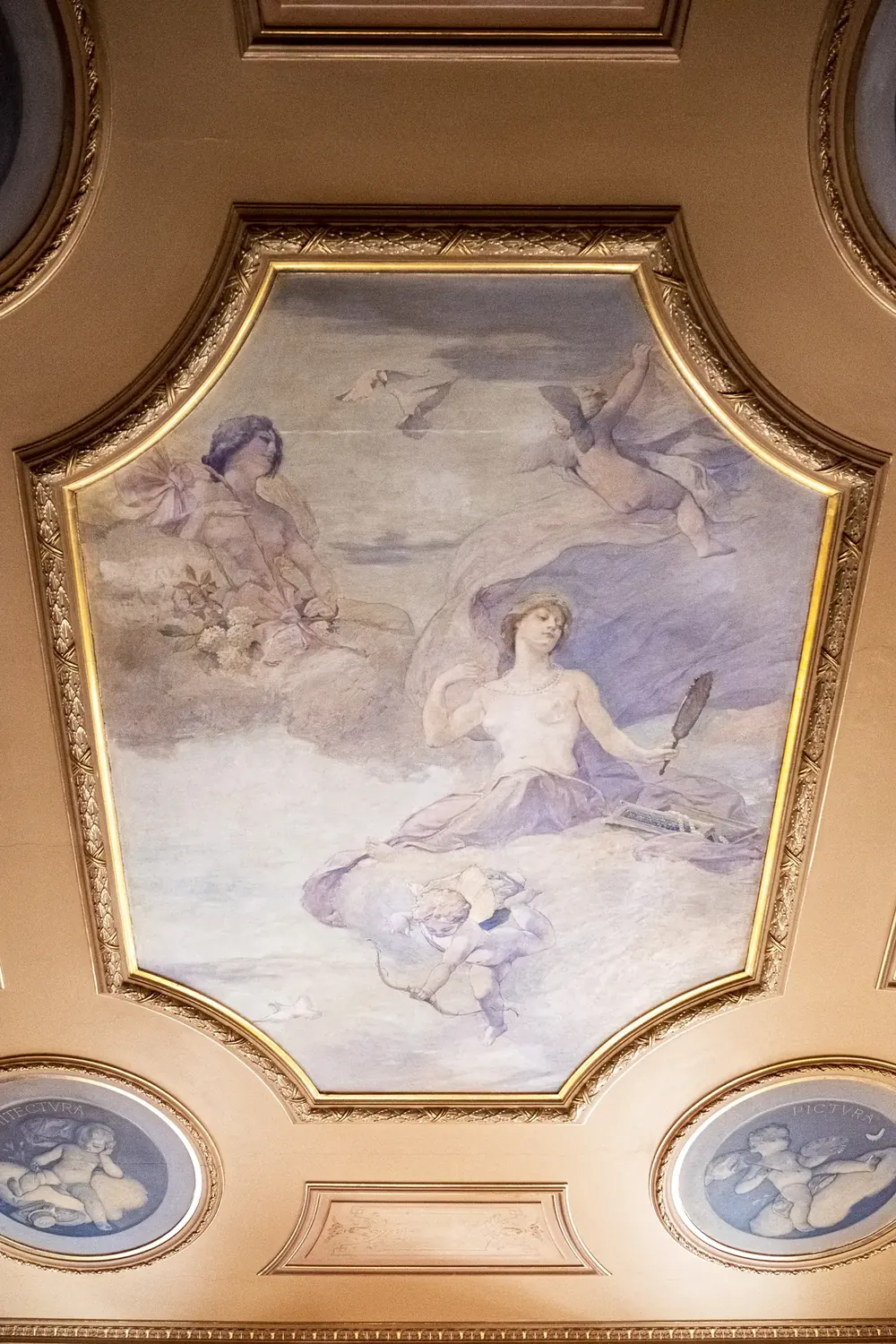
The grand salon combines a period onyx fireplace with paintings by Jules Godefroy completed in 1896. On the garden side, the former smoking room known as the “Turkish salon” offers a more intimate setting.
03
Decorative wood panelling and a decorated coffered ceiling give this garden-facing room its warmth.
04
A kitchen with two islands and direct garden access brings a contemporary note to the ground floor.
05
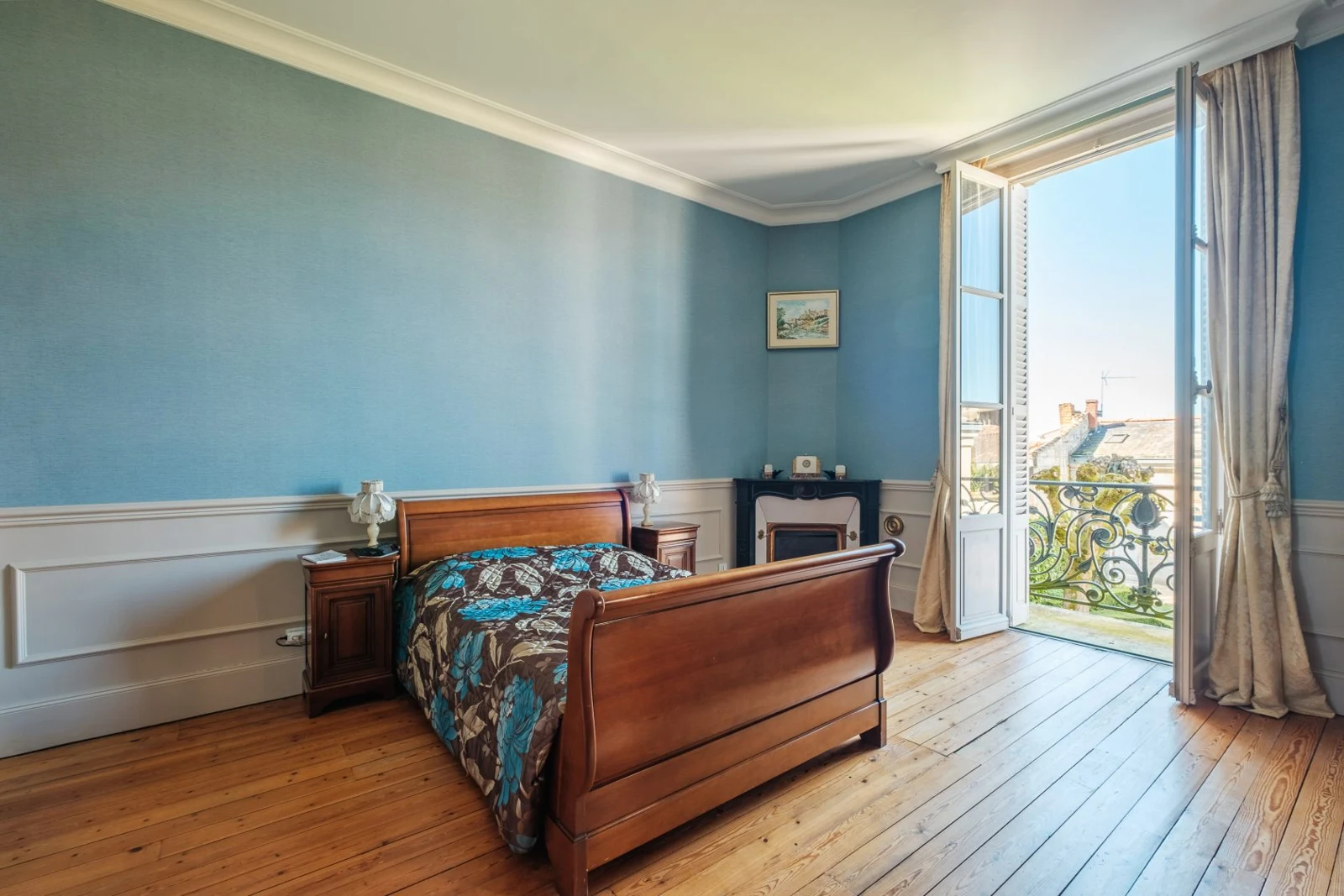
There are three bedrooms upstairs, each with its own en-suite bathroom. The principal bedroom has a cherry-wood dressing room and a balcony overlooking the garden.
06
A double garage, cellars and several access points complement the main living spaces.
Furnishing inspiration
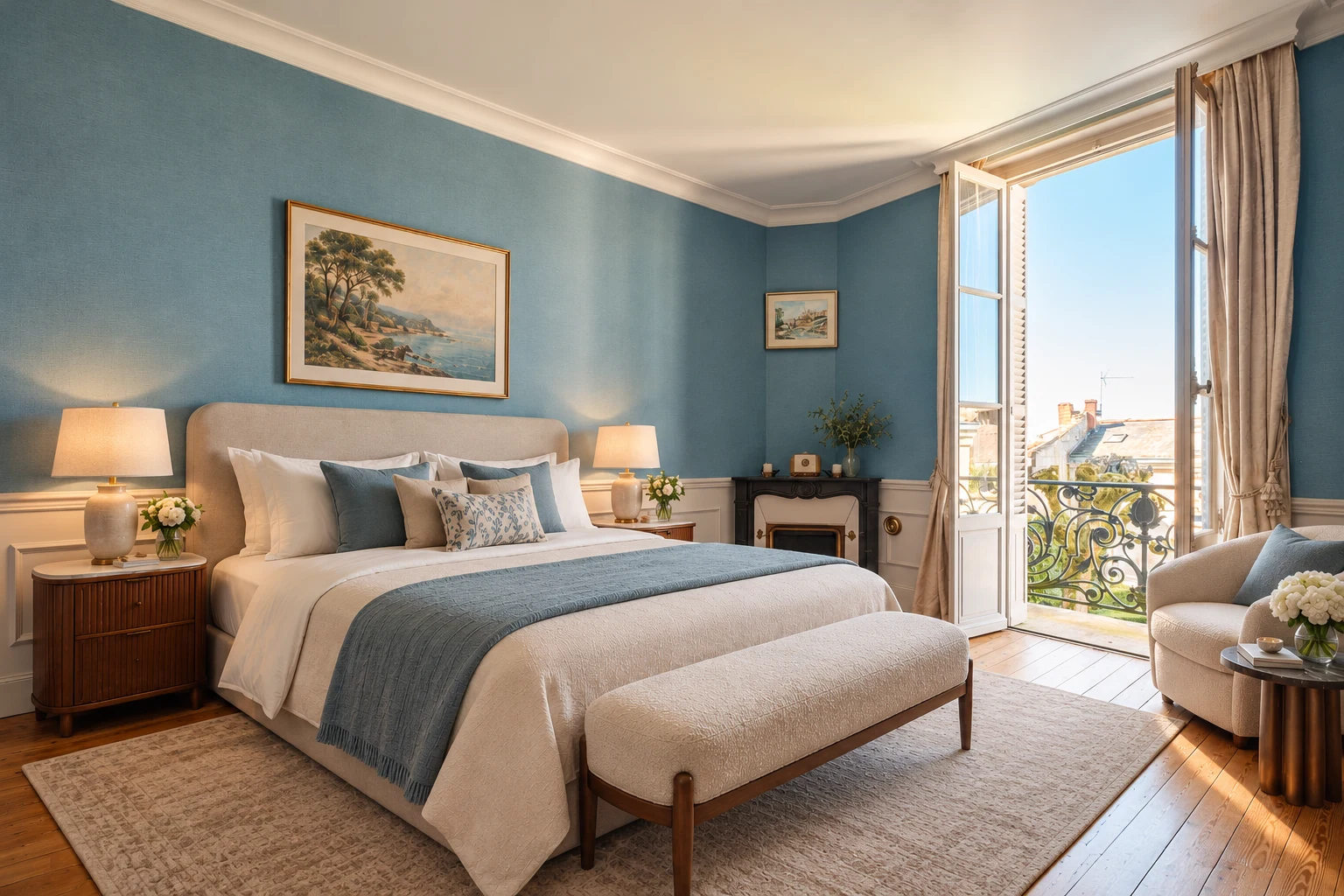
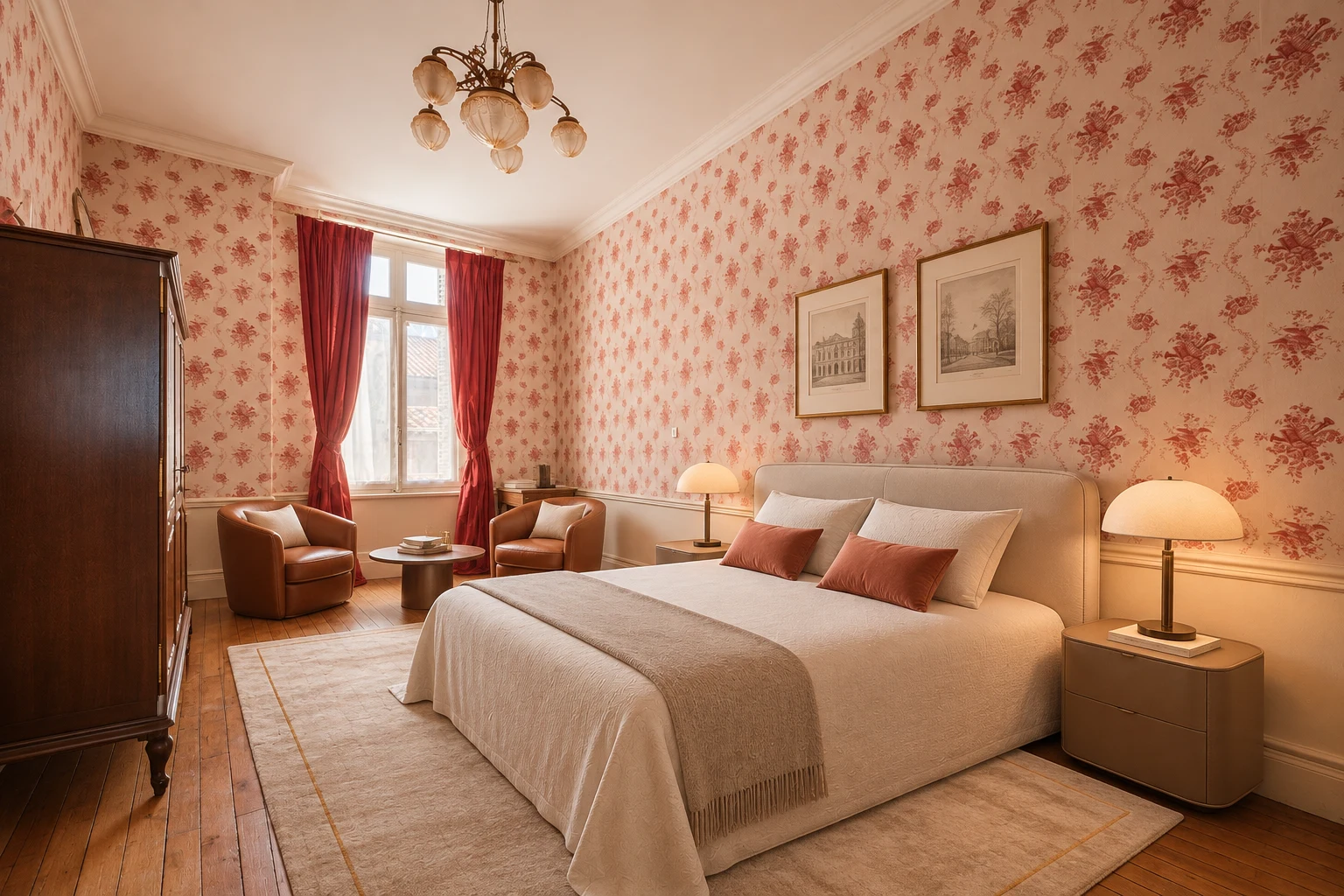
Three bedrooms, two ways to feel at home. Move the divider to explore furnishing ideas.
 Current interiorFurnishing inspiration
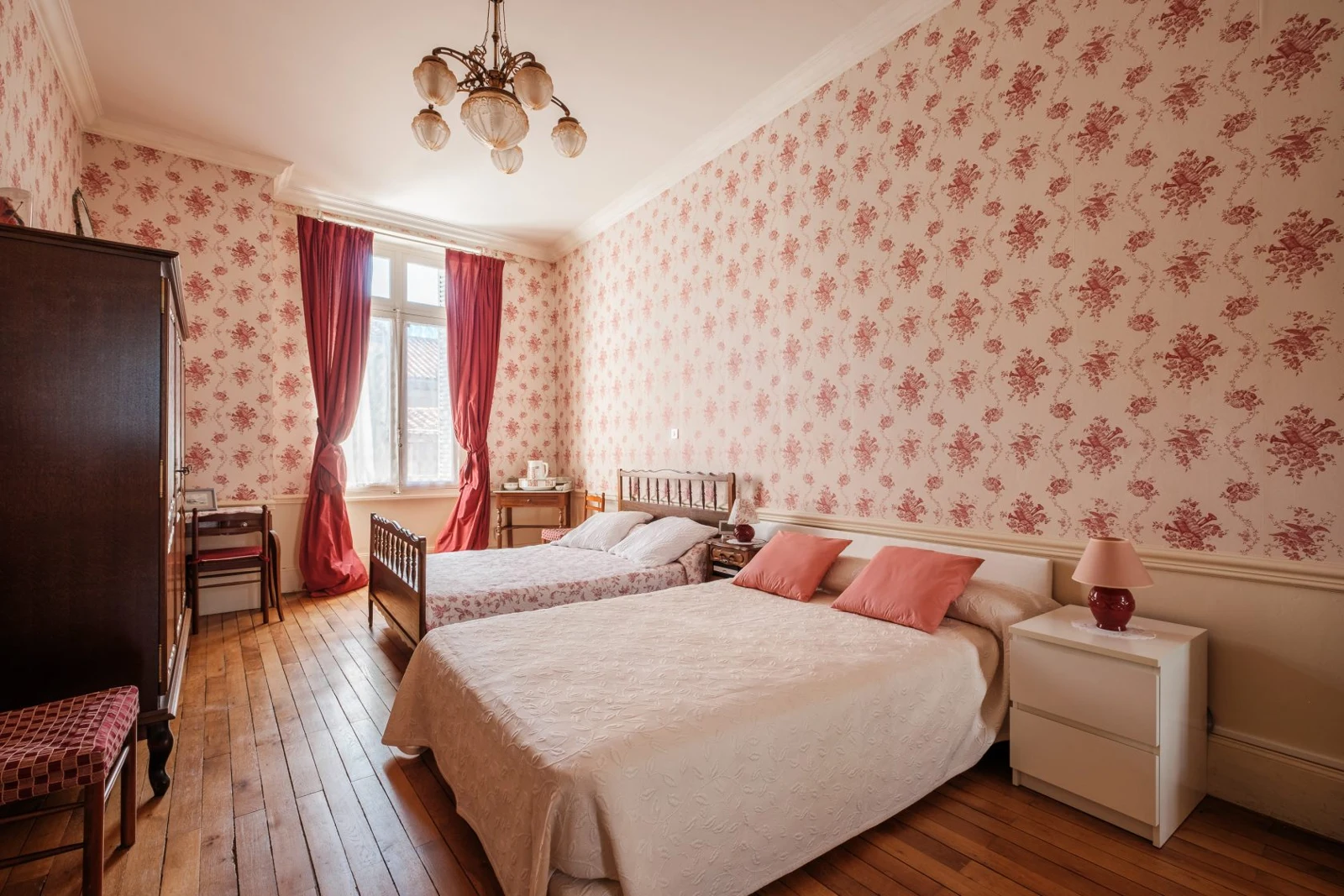 Current interiorFurnishing inspiration
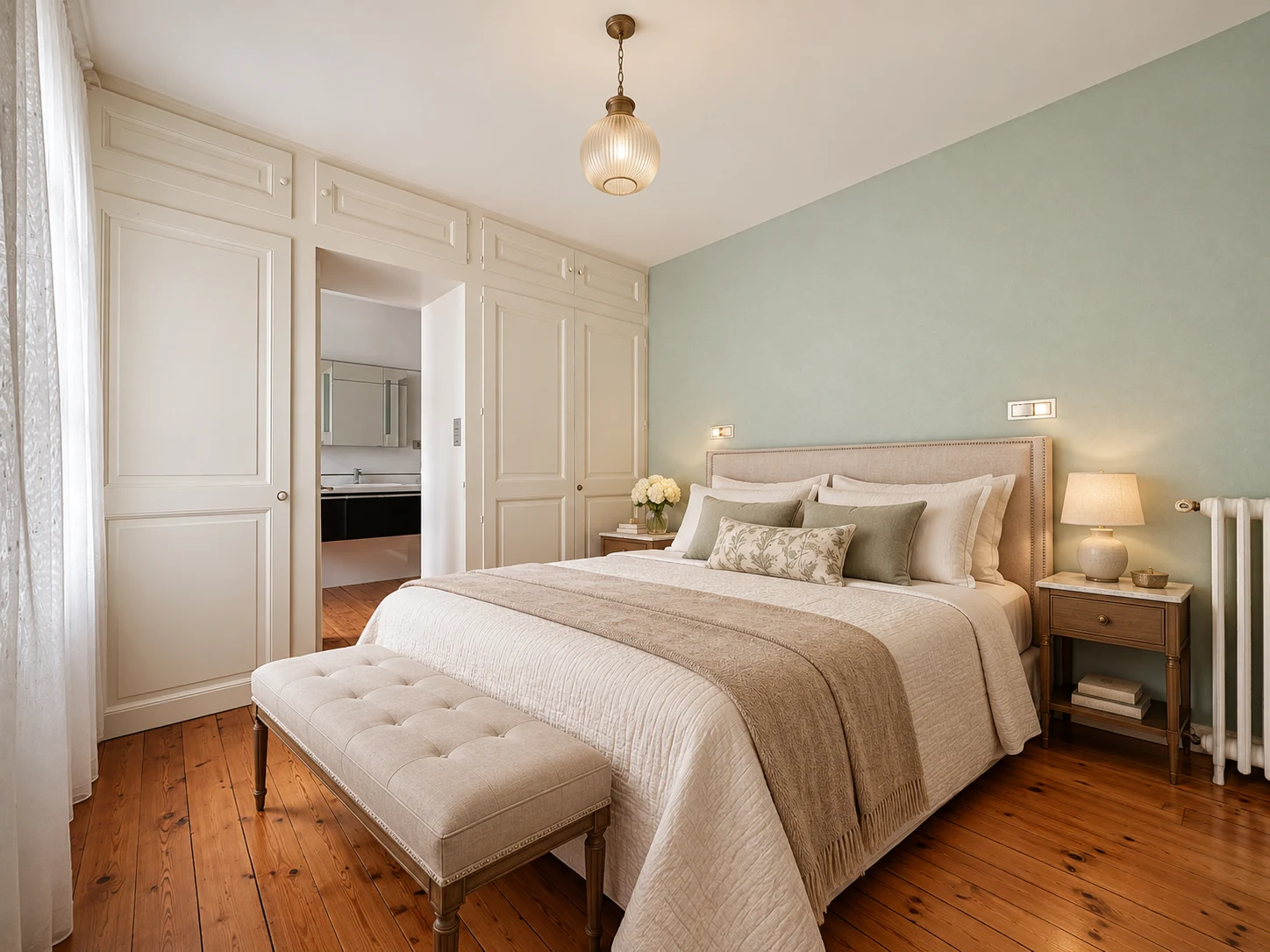
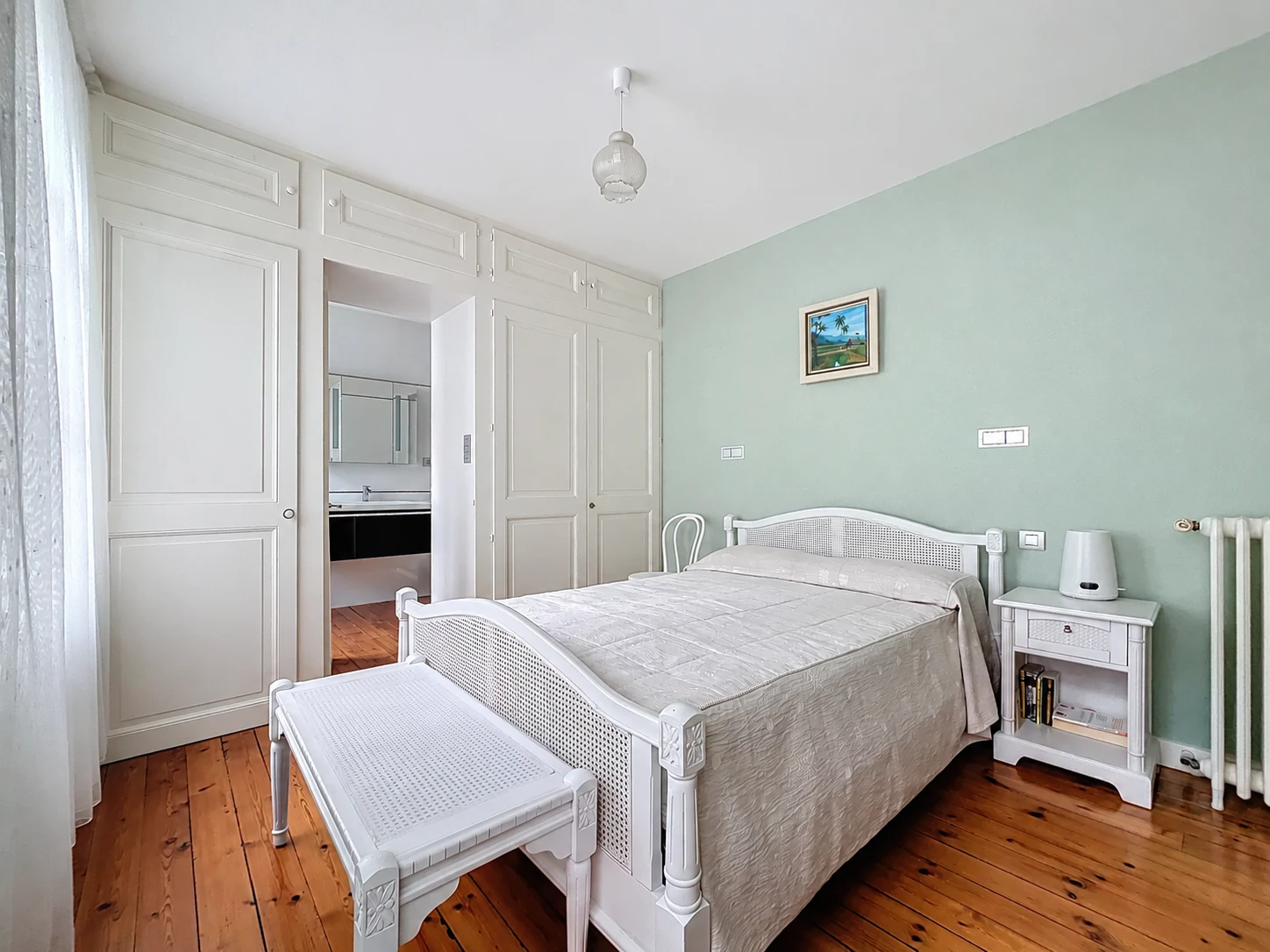 Current interiorFurnishing inspiration
Virtual staging — illustrative furnishing proposals, not the current condition.
Kitchen & bathrooms
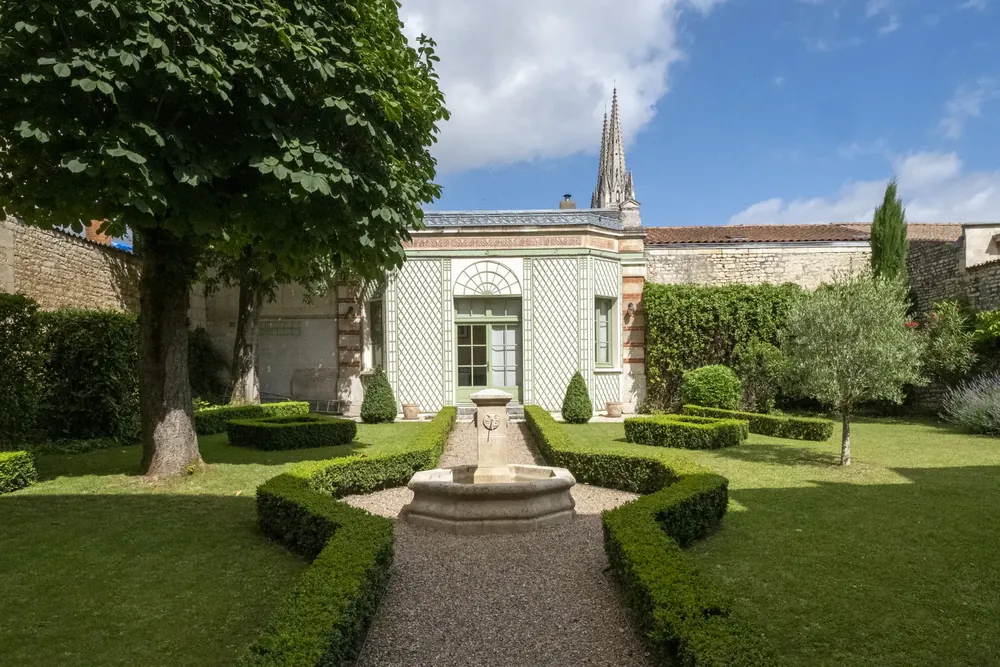
An enclosed garden, with its formal planting, emphasises the view towards the orangery. The octagonal fountain, a later addition, is decorated with medallions whose motifs are inspired by the orangery’s terracotta frieze.
The 24 m² orangery is a place apart, with limestone, brick and decorative zincwork. A quiet setting for reading, working or simply enjoying the garden.
See the garden photographs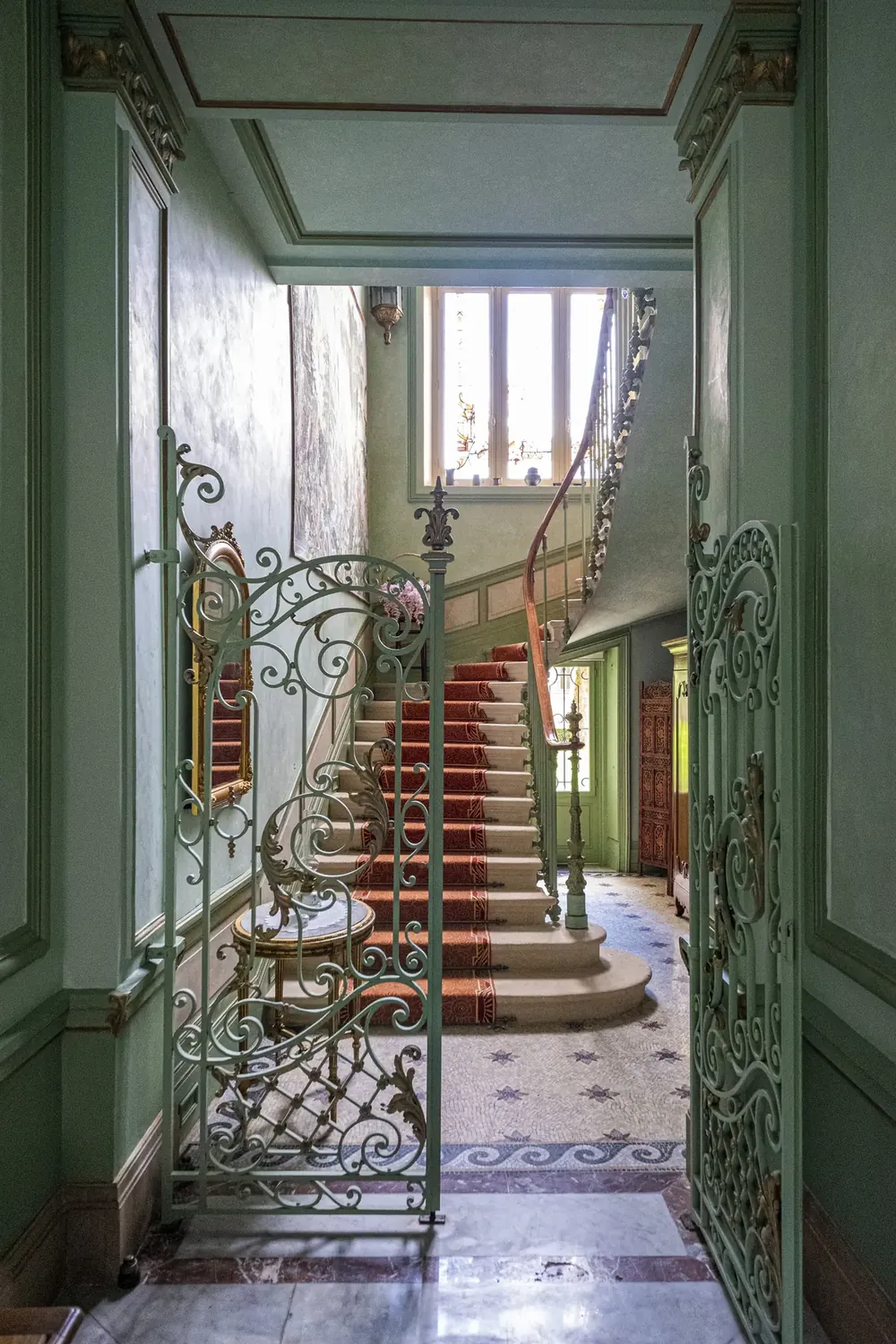
The story of the house
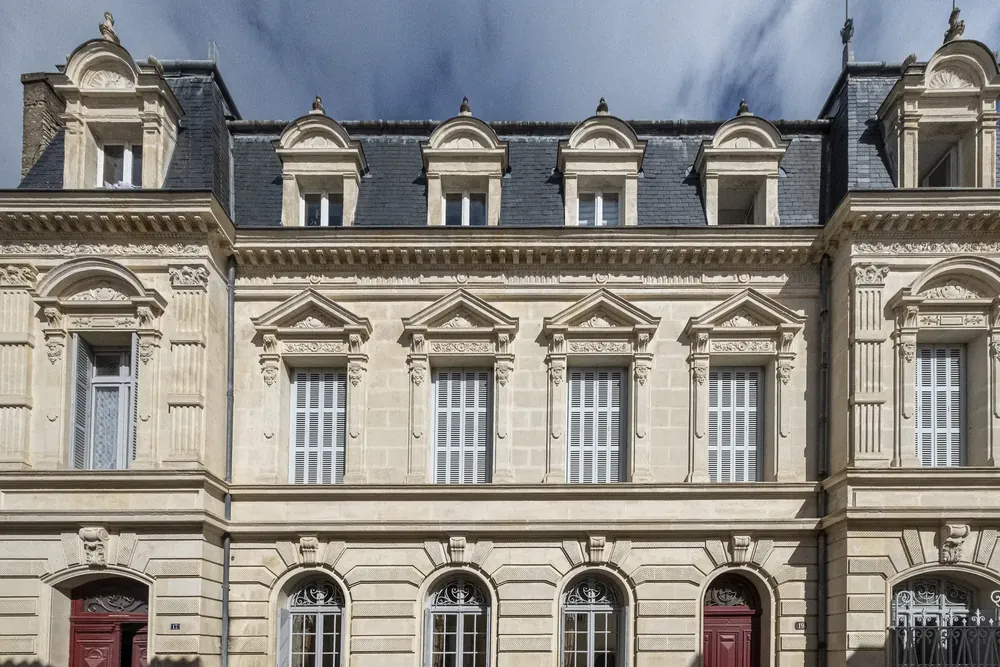
Built in 1894 to designs by Niort’s municipal architect Georges Lasseron, this hôtel particulier was commissioned by Dr Albert Roulland, a physician with a deep interest in literature, archaeology, art and music.
The neo-Renaissance architecture reflects that cultivated outlook: sculpted stonework outside, and a sequence of rooms where paintings, stained glass, mosaic and woodwork each have a part to play. Among his many activities, Albert Roulland also served as a city councillor from 1904 to 1912.
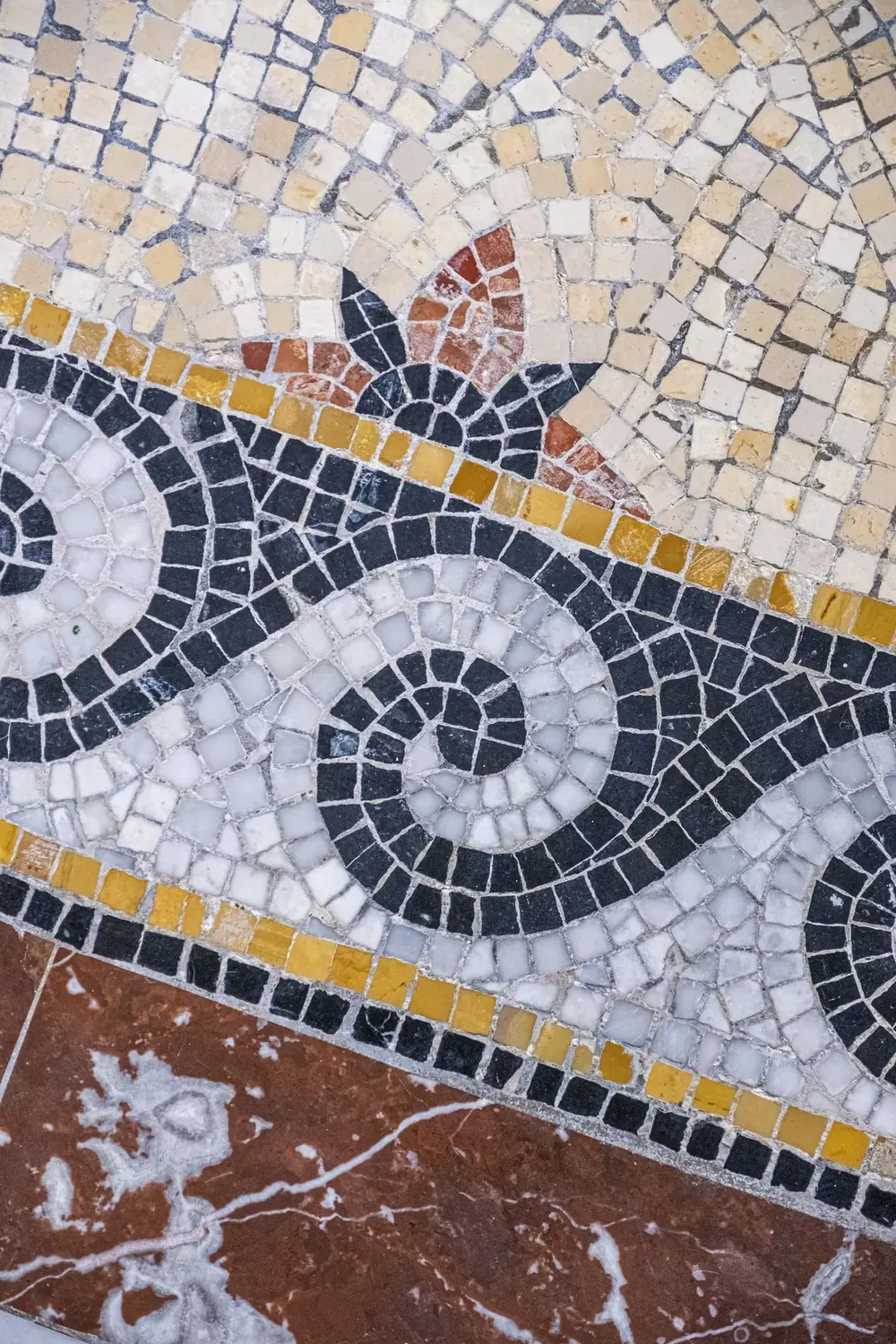
A black-and-white wave border and red and black stars mark out the staircase area. Combined with marble and wrought iron, the mosaic forms the entrance decoration.
Albert Roulland acquires houses and gardens to make room for the project.
The neo-Renaissance hôtel particulier is built to designs by Georges Lasseron.
Albert Roulland commissions the salon’s painted decoration from Jules Godefroy.
Historical account paraphrased from Les belles demeures de Niort, Geste Éditions, 2021, “Hôtel particulier”, pp. 90–95.
Architecture & decorative arts
From the street façade to the smallest painted detail, explore the ideas and craftsmanship that give each room its character.
The story begins with a site assembled for a new home. In 1893, Dr Albert Roulland acquired several houses and gardens. The hôtel particulier was built in 1894 to designs by Georges Lasseron, Niort’s municipal architect, who was also working on the town hall. The residence brought together Roulland’s ambitions for a home and Lasseron’s architectural vision.
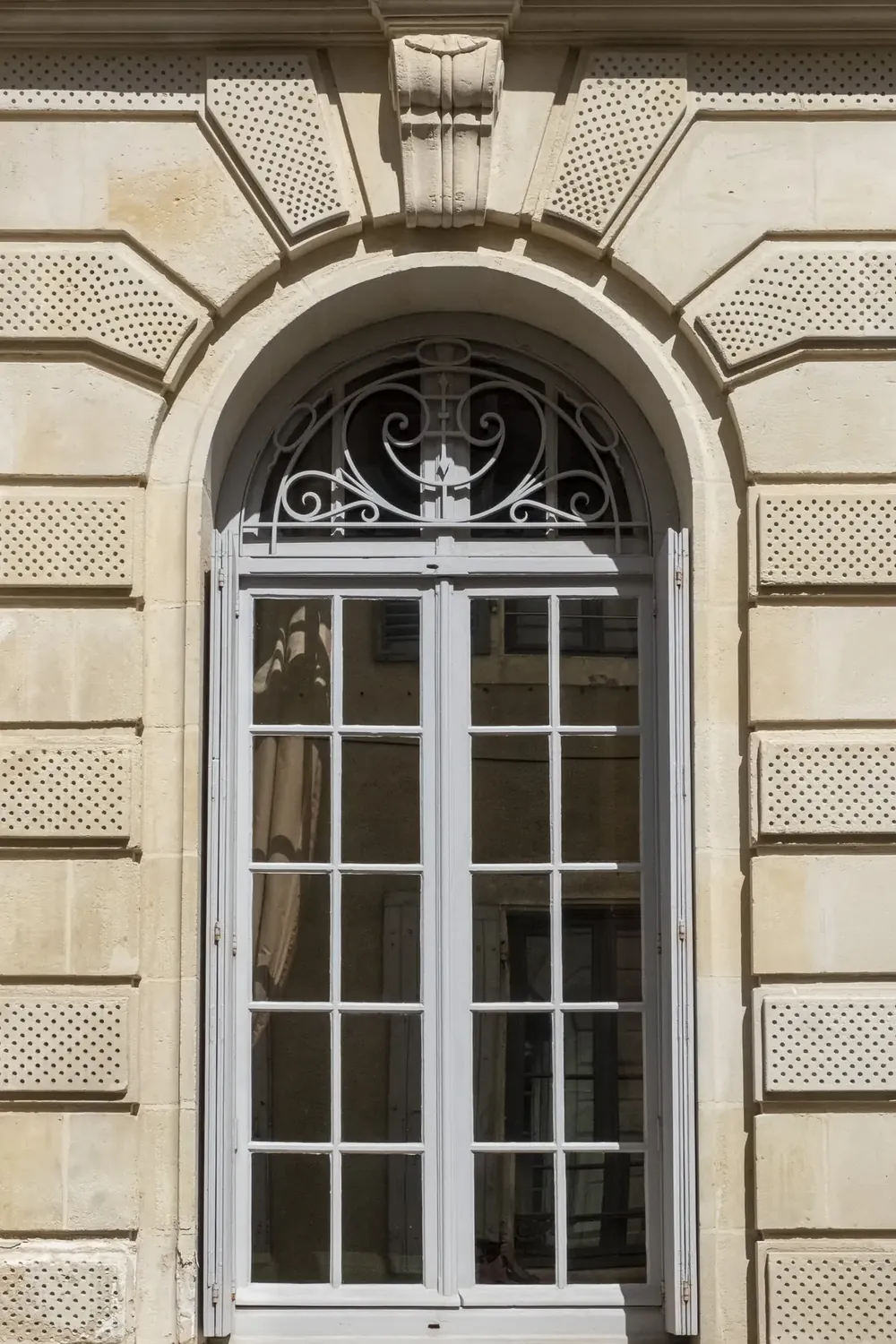
Mr Roulland’s interests ranged from medicine to literature, archaeology, art and music. The decorative commissions inside the house give a tangible expression to that cultural world. Outside, the neo-Renaissance façade sets a more formal tone: look at the framing of the windows, the carved stone ornament and the rhythm of the openings. The photographs show the whole historic building; the residence offered for sale occupies its principal part, with its private garden, orangery and garage.
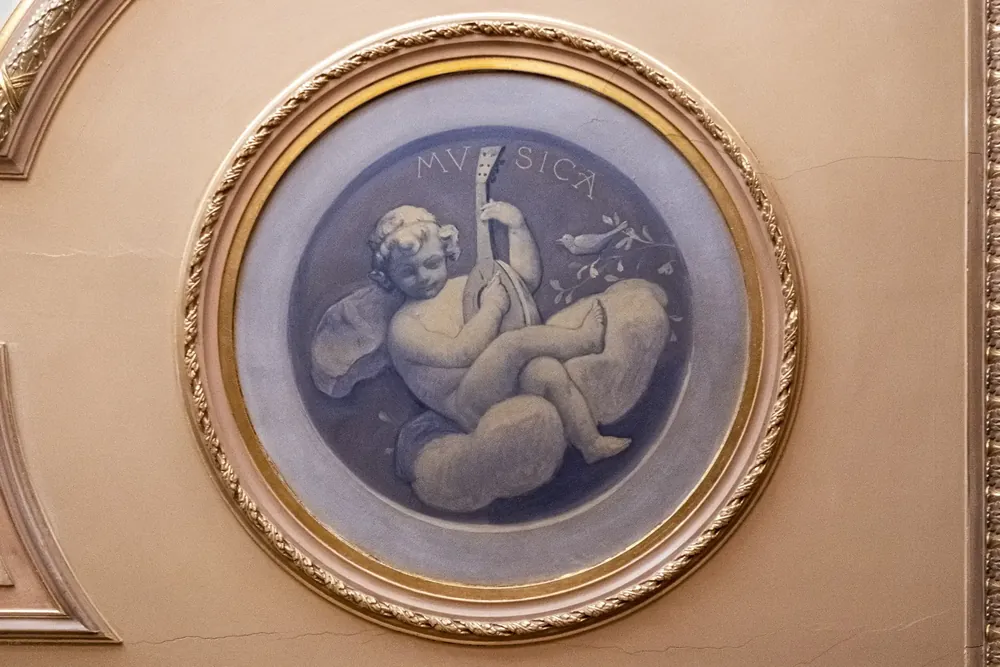
The salon rewards a second look above eye level. In 1896, Roulland commissioned the La Rochelle artist Jules Godefroy to paint a cycle devoted to Venus. The central ceiling composition and the surrounding medallions belong to a decorative programme, rather than a collection of unrelated pictures. Putti—small childlike figures—represent sculpture, painting, architecture and music.
In the detail shown here, the musical subject occupies a circular frame, set against the lighter mouldings around it. Seen beside the wider ceiling photograph, it reveals how large compositions and smaller allegories work together. The arcades, painted surfaces and gilt accents carry the eye across the room; the photographs let you follow that sequence without losing the individual details.
The staircase brings several decorative crafts into a single view. The window bears the signature “Ch. Champigneulle fils de Paris”. The book describes flowers, aquatic creatures and a swallow among flowering cherry: natural motifs that invite close inspection as well as bringing colour to the entrance. The signature photograph preserves a small but important piece of evidence about the window’s attribution.
Below it, the floor uses another kind of pattern. Black-and-white waves border the staircase area, with red and black stars set into the mosaic. Their geometry contrasts with the curves of the ironwork and the botanical forms in the glass. The close-up shows how individual tesserae—the small pieces that form a mosaic—build the lines and changes of colour.
The dining room has a different register from the salon. Carved woodwork gives the walls and doors depth, while painted decoration draws attention upwards. The doorway detail shows the architectural treatment of an everyday threshold: layered mouldings, a projecting pediment and ornamental carving turn the door into part of the room’s composition.
Look up to discover a painted panel depicting a parrot. Framed by the ceiling’s divisions, its colours and movement contrast with the more substantial presence of the woodwork below. Together, the room view and these close-ups show why the dining room deserves more than a passing photograph: its character lies as much in the smaller decorative passages as in its overall proportions.
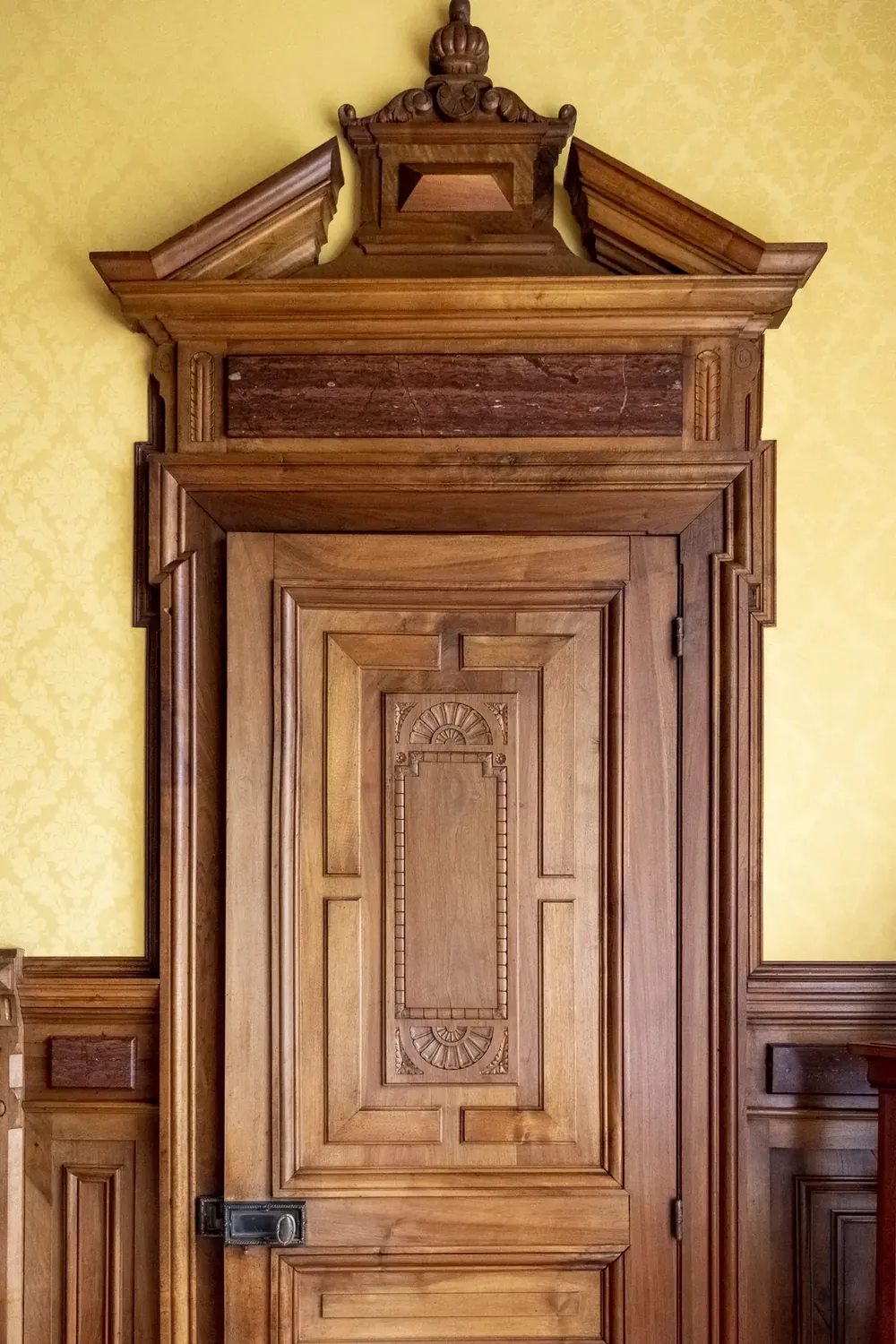
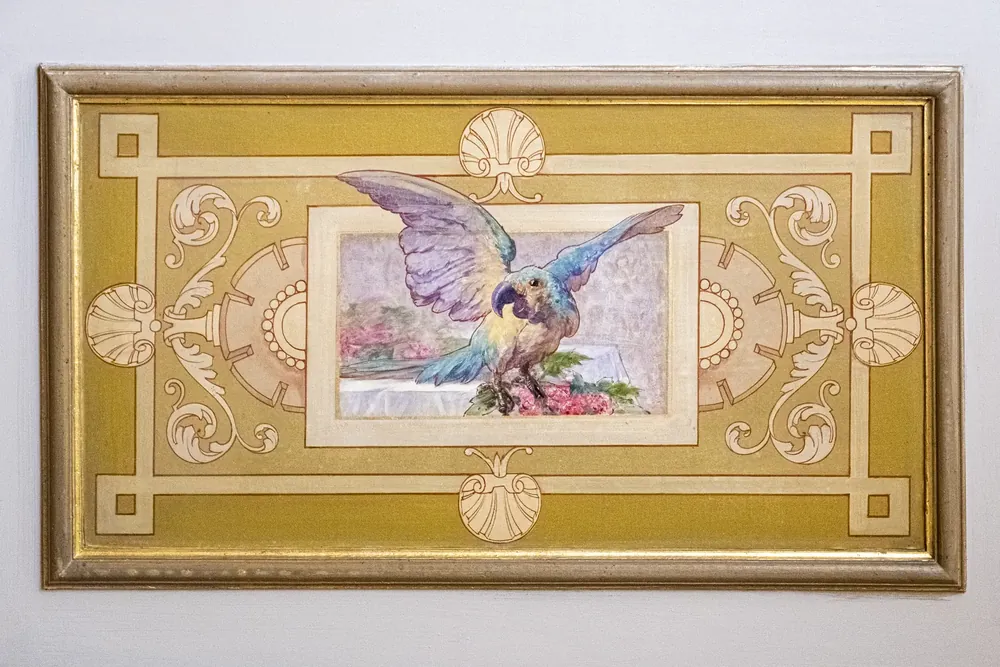
The former smoking room changes both the scale and the atmosphere of the reception sequence. Vivid painted ornament, geometric patterns and a richly decorated doorway create an enveloping interior.
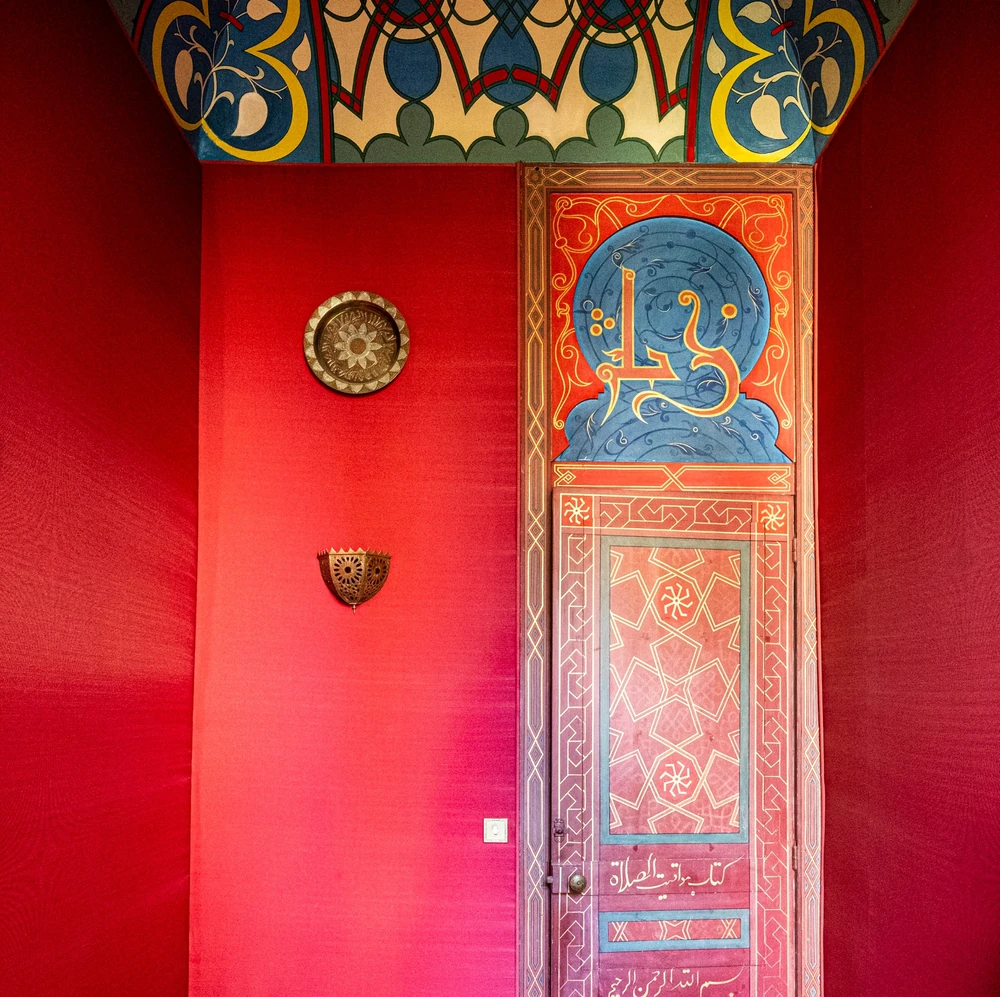
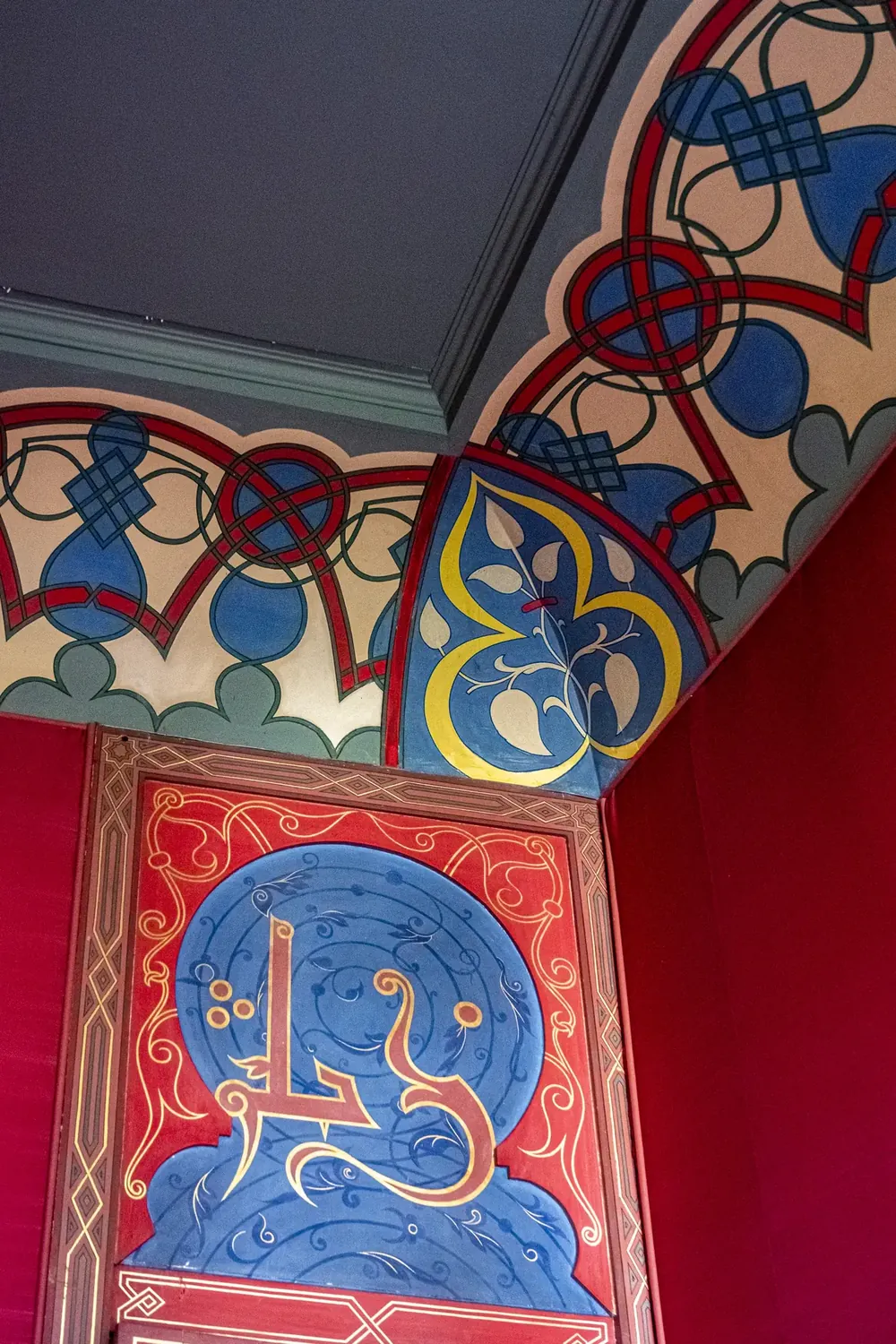
Historical account paraphrased from Les belles demeures de Niort, Geste Éditions, 2021, “Hôtel particulier”, pp. 90–95.
At home in Niort
A historic town in Deux-Sèvres, Nouvelle-Aquitaine, Niort offers a different rhythm from a rural retreat: a town-centre address, cultural life and riverside walks, with the Marais Poitevin and the Atlantic coast to explore beyond it.
The covered market at Les Halles, the medieval Donjon and the gardens of Place de la Brèche give the centre its character. Shops, cafés and restaurants make everyday town life part of the appeal.
The Sèvre Niortaise runs through the town towards the waterways of the Marais Poitevin. Riverside walks, cycle routes and boat outings allow you to connect with nature while discovering villages such as Coulon and Arçais.
Direct high-speed TGV trains connect Niort with Paris Montparnasse, with journeys taking as little as 1 hour 58 minutes, depending on the timetable. The hôtel particulier is approximately 15 minutes’ walk from the station.
La Rochelle is around 66 km away by road; direct trains take around forty minutes. Its old port invites Atlantic outings, including to the islands of Ré, Aix and Oléron.
La Rochelle and Poitiers airports, approximately an hour’s drive from Niort, also offer further options.
Travel information checked on 30 September 2026. Train times are station-to-station; road times are approximate, not guaranteed door-to-door timings. Check your travel date and onward connections.
Before your visit
Understand what is being offered, then ask the agents for the documents and details you need.
The property for sale occupies a substantial part of an hôtel particulier under French co-ownership arrangements (copropriété), accounting for approximately 48% of the voting rights at co-owners’ general meetings. It offers the independence of a private house, with two separate entrances on opposite sides of the building.
The co-ownership documents specify the private areas, communal areas and the rights attached to them.
The living space is 236.5 m². In addition, there is a garden of approximately 400 m², a 24 m² orangery and a 35 m² garage accommodating two cars side by side.
These spaces are presented separately from the living space. Ask the agents for the detailed schedule of areas.
One of the cellars is directly accessible from inside the residence. Access to the garage is through the garden and the orangery. The garage also has its own independent access from the street.
The residence has a gas condensing boiler and D ratings for both energy performance and greenhouse gas emissions. The agents can provide the full diagnostic reports.
Most of the furniture is not included in the property sale, but can be purchased separately by agreement. The agents can confirm which items are available and the terms of any separate purchase.
Contact one of the agencies below, quoting the listing reference. Viewings are by appointment; the agents can also provide the current charges and sale conditions.
Good to know: the street-facing façade and zincwork were refurbished in 2014, followed by the roofs in 2022.
Living space and orangery are distinguished on this page.
Full reports available through the listing agents.
Request the current charges and supporting documents.
Come and discover it
For a viewing, a fuller property dossier or questions about the sale, contact the listing agents directly.
Poitou-Charentes-Vendée
Martine Brandet
+33 5 49 60 27 00Niort
Cannelle Guittonneau
+33 7 85 82 77 35Data controller: Julien Renaud.
For privacy questions or to exercise your rights regarding your personal data, please contact us at [email protected].
Google Analytics 4 (G-NZCKB2FJGV) is optional. Its script and requests are blocked until you accept. Rejecting does not restrict access to the site. Your choice is saved locally in this browser; you can change it or withdraw consent using the permanent footer link.
After acceptance, Google receives information about pages viewed, traffic sources, approximate country, browser, languages and interactions. Analytics cookies (_ga and _ga_…) distinguish visits; their lifetime is limited here to six months. We measure links to Groupe Mercure and Espaces Atypiques separately from telephone clicks. These clicks do not establish an enquiry or a completed call. Advertising personalisation and Google Signals are disabled in our tag.
Withdrawal blocks new Analytics events, deletes accessible Analytics cookies on this domain and reloads the page. It does not retrospectively delete data already sent. Preferences apply separately to each browser and domain. Google processes data under its privacy policies; server-side data retention depends on the GA4 property settings.
This choice covers our Google Analytics integration. ChatGPT Sites hosting has separate analytics and may process technical data to provide and secure the service. This banner does not control those processes; we cannot claim that rejection disables them.
Google — Privacy and analytics · OpenAI — Privacy and analytics
Optional processing by Google Analytics relies on your consent under Article 6(1)(a) GDPR. You may withdraw consent at any time, without affecting the lawfulness of processing carried out before withdrawal.
You may request access, rectification, erasure or restriction of processing and, where the legal conditions apply, data portability or object to processing. Use the contact above to exercise your rights. You may also lodge a complaint with the CNIL.
Cookie lifetime is separate from retention within GA4. Event data retention is set to 2 months and user data retention to 2 months. Reset on new user activity is enabled: each new event from a user restarts the retention period for their identifier, which can therefore be retained beyond 2 months from the first visit. This reset applies to user data, not the event retention period. Standard aggregated reports are not governed by these settings.
Data may be processed outside the European Economic Area, including in the United States. Google describes reliance on the EU–US Data Privacy Framework (DPF) for covered transfers and standard contractual clauses where needed. See Google’s transfer safeguards and its data processing terms.
For hosting, OpenAI describes international processing, including in the United States, relying on adequacy decisions or standard contractual clauses with the applicable UK addendum. Cloudflare, used for site delivery and security, describes reliance on the DPF for covered US transfers and standard contractual clauses for other transfers. The linked documents explain the safeguards and how to obtain further information or a copy. The mechanism depends on the transfer concerned; Analytics consent does not control separate hosting processing.
Your explicit language choice is saved in this browser’s local storage until you change it or clear the site’s data. Dismissed suggestions and the language of an intentional arrival are remembered only for the tab session. These settings support navigation and are not sent to a third-party service. No geolocation is used.